How to know if you are ready for an art licensing portfolio.

If you’re a surface pattern designer sitting on a folder full of beautiful designs… but still don’t feel “ready” to build your portfolio or pitch for licensing deals, this is for you.
I want to gently say something that might shift everything:
You’re probably not behind.
You’re just unstructured.
And those are two very different things.
Why So Many Surface Designers Feel “Not Ready”
I hear this all the time:
“I just need a few more collections.”
“I don’t think my style is defined enough yet.”
“I want to refine a few things before I put it out there.”
“I don’t have enough work for a proper portfolio.”
On the surface, that sounds responsible. Professional, even.
But often what’s actually happening is this:
You have the work.
You just don’t have a framework for organising and presenting it.
So instead of building a licensing-ready portfolio, you keep making more art.
More motifs.
More repeats.
More collections.
But no structure.
The Real Problem Isn’t Talent, It’s Direction
Most surface pattern designers don’t struggle with creativity.
They struggle with decision-making.
What do I include?
What do I leave out?
Should I show all my styles?
Is this cohesive enough?
Do I need mockups?
How many designs are “enough”?
Without a clear structure, everything feels unfinished.
So you assume you’re not ready.
But “not ready” is often just code for:
I don’t know how to organise this strategically.
The Difference Between Random Work and a Professional Portfolio
Here’s the shift.
A hobby portfolio says:
“Here’s everything I’ve ever made.”
A professional surface design portfolio says:
“Here’s a clear, cohesive body of work created for specific markets.”
That difference has nothing to do with:
Being more talented
Having 100 designs
Waiting another six months
It has everything to do with:
Curation
Clarity
Commercial thinking
When your work is curated properly, it instantly looks more advanced, even if it’s the same designs.
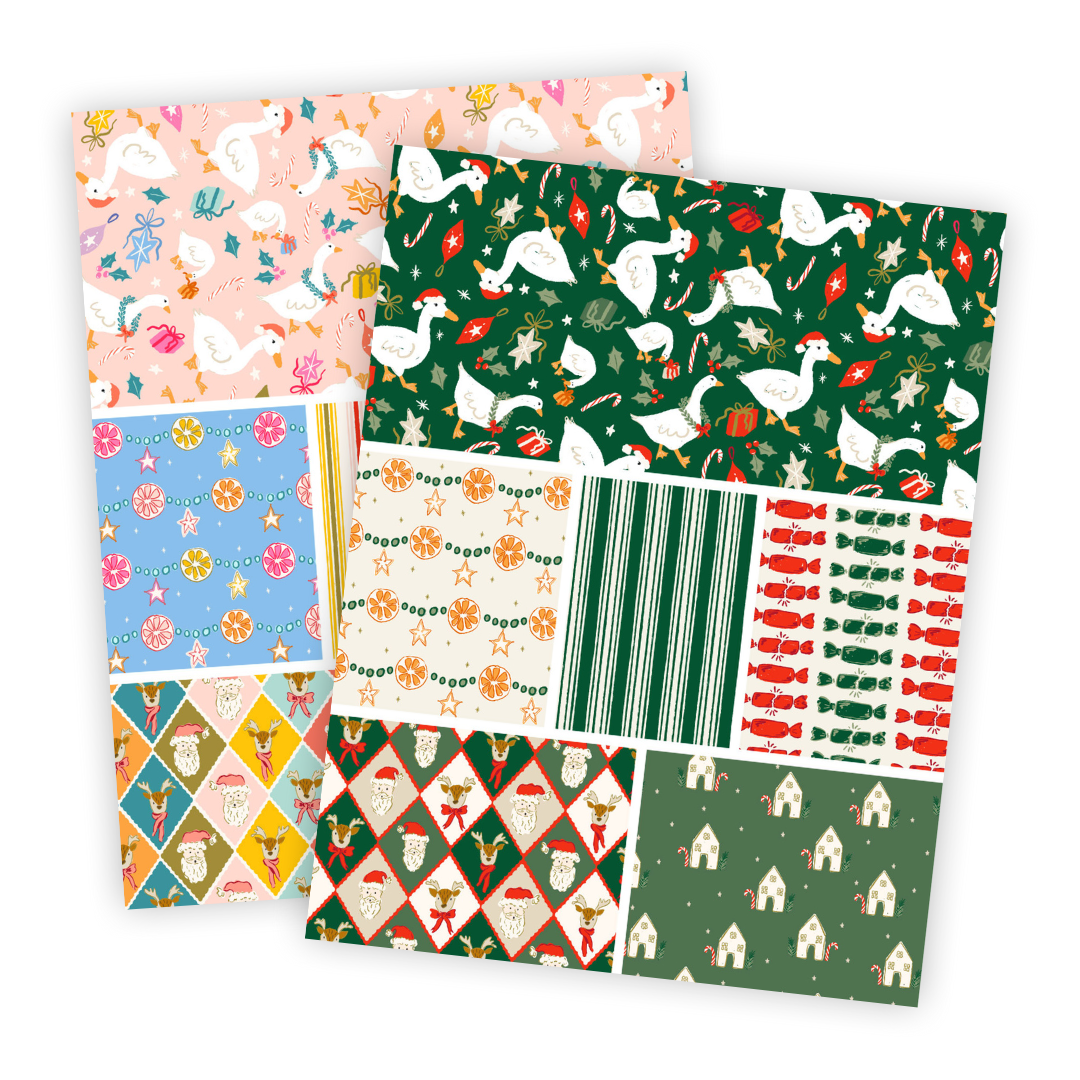
Signs You’re Actually More Ready Than You Think
Let’s sense-check this.
You might be ready to build your portfolio if:
You’ve created multiple repeat patterns.
You can see themes emerging in your work.
You’ve designed with a product or end user in mind.
You care about licensing or working with brands.
You’re just unsure how to present everything.
That’s not “not ready.”
That’s ready for structure.
Why Structure Builds Confidence
This is the part no one talks about.
Confidence doesn’t usually come first.
Clarity does.
When you know:
What your portfolio includes
Who it’s for
How it’s organised
Why each collection is there
You stop second-guessing yourself.
You stop endlessly tweaking.
You stop hiding behind “one more design.”
And you start positioning yourself as a professional surface pattern designer available for licensing.
What Makes a Licensing-Ready Portfolio Different?
I’ll be diving deeper into this soon, but at a high level, a licensing-ready portfolio:
Shows cohesive collections (not scattered singles)
Signals commercial awareness
Makes it obvious what industries you design for
Feels intentional and edited
Makes it easy for art directors to understand your style quickly
It’s not about volume.
It’s about presentation.
And presentation is something you can learn.
If You’ve Been Waiting to Feel Ready…
Maybe you don’t need more time.
Maybe you need a structure that helps you see your work clearly.
Next week, I’ll be sharing more about what actually makes a surface pattern design portfolio professional, and why random uploads don’t lead to licensing deals.
If you’d like to be the first to hear about the free 4-part training I’m running on building a licensing-ready portfolio, you can join the waitlist below.
It’s designed specifically for surface pattern designers who:
Have the work
Want licensing opportunities
And are ready to stop overthinking and start positioning themselves properly
You’re not behind.
You’re just one clear framework away from feeling confident about your portfolio.
And that’s fixable.

Frequently Asked Questions
What should a surface pattern design portfolio include?
A surface pattern design portfolio should include cohesive artwork and clearly presented designs. Instead of uploading every design you’ve ever created, focus on curated collections that demonstrate consistency, market awareness, and licensing potential. Art directors are looking for clarity, cohesion, and professionalism, not volume.
How many designs do I need for a licensing-ready portfolio?
You don’t need hundreds of designs to build a licensing-ready portfolio. A small number of strong, cohesive collections is far more effective than a large collection of unrelated patterns. Quality, curation, and strategic presentation matter more than quantity when building a portfolio for art directors and licensing opportunities.
Why isn’t my surface pattern portfolio attracting art directors?
If your portfolio isn’t attracting art directors, the issue is usually structure, not talent. Common problems include unclear style direction, random uploads, lack of collections, and no clear industry focus. A licensing-ready portfolio makes it easy for art directors to quickly understand your aesthetic, intended markets, and professionalism.
Ready to jump into creating a portfolio? I think you’ll love The Polished Portfolio Method! Click here to learn more xx