What Is a Sell Sheet, and Why Every Surface Pattern Designer Needs One
You do not need a finished portfolio to start presenting your work well. You do not need a signature style, and you do not need a full collection of coordinating prints. You need one page.
That page is a sell sheet, and for a lot of designers it is the most useful thing you can make with the designs already sitting in your folders. Here is what it is, what it is for, and how to put one together.
What is a sell sheet?
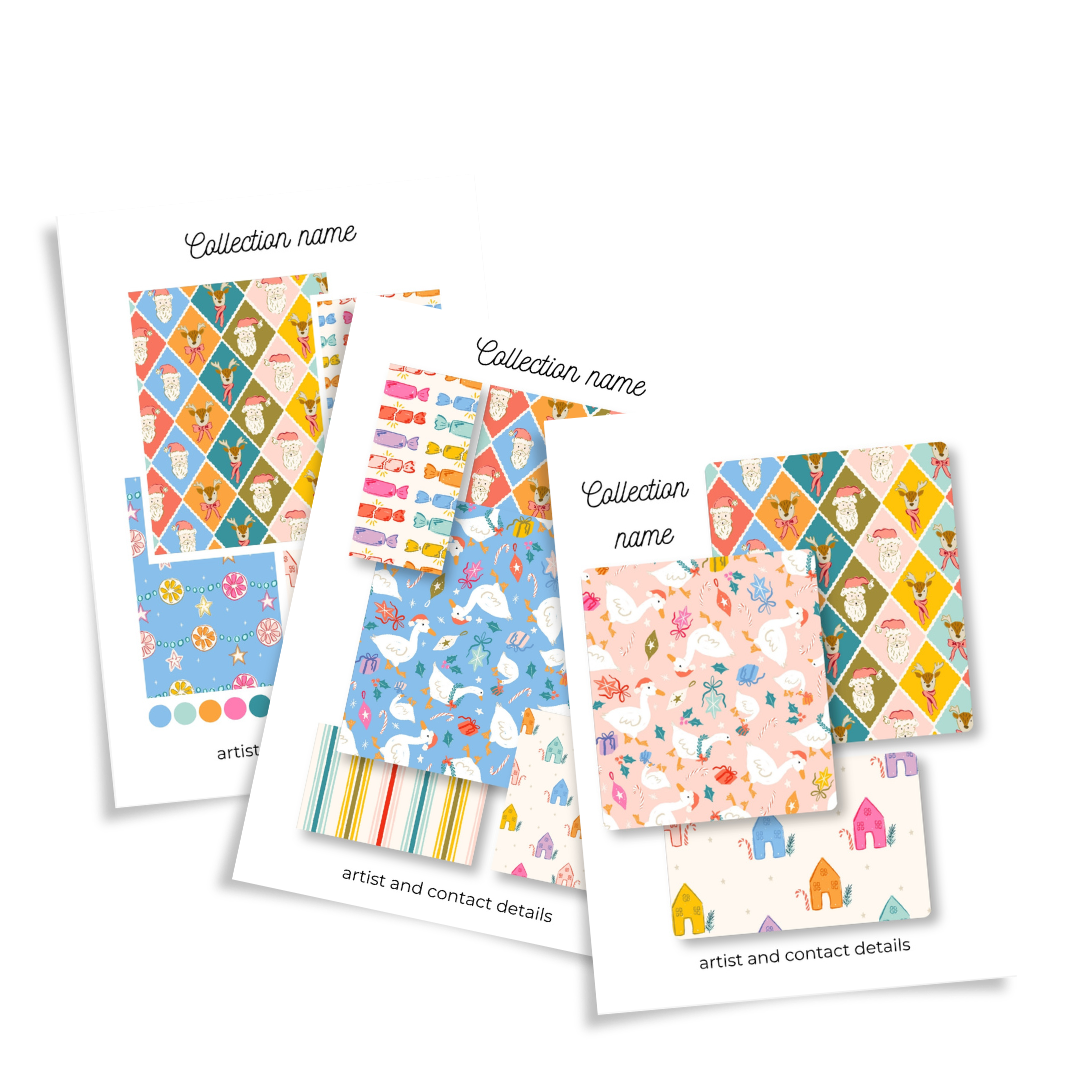
A sell sheet is a single page that shows a small group of your designs together in one place. That is the whole idea. Instead of your work living as separate files scattered across folders, you lay a handful of designs out on one clean page so they can be seen side by side.
That one small shift changes how your work reads. Loose files look like practice. A considered page looks like a collection.
Grab these sell sheet templates here
What goes on a sell sheet?
A few of your designs, presented cleanly, with a little room to breathe. Usually your name somewhere, and a way to get in touch. That is enough.
You do not need a lot on it. A sell sheet is not trying to show everything you have ever made. It is showing one tidy, cohesive group of work, so keep it simple and let the designs do the talking.
Do you need a signature style before you make one?
No. And this is the part most people have backwards.
You do not wait until you have a signature style to make a sell sheet. Making the sell sheet is one of the best ways to find your style in the first place. When you place your designs next to each other on one page, the style in your own work starts to show up. The colours you reach for. The motifs you keep coming back to. You get to notice your style instead of waiting for it to arrive.
What can you use a sell sheet for?
Three things, mostly.
The first is simply seeing your own work properly. When your designs are on one page, you can finally tell what goes together and what does not, which is almost impossible when everything is a separate file.
The second is sharing. A single put-together page is far easier to post on Pinterest or Instagram than a stack of separate images, and it makes your work look intentional.
The third is pitching. When you reach out to a brand, a sell sheet is often exactly what an art director wants to see first. Not your entire catalogue. Just a clear, cohesive page that shows them what you do.
How is a sell sheet different from a portfolio?
A portfolio is your fuller body of work, tailored to who you’re presenting it to. A sell sheet is one focused page, often built around a single collection. The useful thing is that you can make a sell sheet long before you have a full portfolio. It is a much smaller, much less overwhelming place to start, and you can build up from there.
How do you make a sell sheet without fancy software?
You use a template. You do not need to learn page-layout software or design a page from scratch. A good template has already done the layout thinking for you, so you drop your designs in, and it looks polished straight away.
One thing that takes a sell sheet from nice to really compelling is showing a design on an actual product, a mockup, so a brand can picture it on their shelves. That is a whole topic on its own, and it is what I want to walk you through next.
Where to start
You already have the designs. A sell sheet is just a simple way to present them so they look like what they are, which is the work of someone who takes this seriously.
If you want a head start, I made some free sell sheet templates you can drop your work straight into. Grab them below
Frequently asked questions
How many designs should go on a sell sheet?
A small, cohesive set. A tidy handful that sits well together beats a crowded page every time. Fewer, stronger designs always look more professional. 3 - 8 is a great place to start
Do I need product mockups on it?
No. A clean sell sheet works on its own. Mockups make it stronger, but they are a bonus, not a requirement.
Do I need a website first?
No. A well-presented one-page sell sheet does the job beautifully on its own.
What if my designs are in different styles?
Put them on the page anyway and see. You will usually spot two or three that sit comfortably together, and that little group is your first sell sheet.