Best Surface Pattern Portfolio Course for Licensing

If you already have a portfolio but you are not receiving licensing enquiries, it can feel confusing.
You have done the work.
You have built the website.
You have uploaded your designs.
So why is nothing happening?
This is one of the most common questions surface pattern designers ask.
And the answer is usually not about talent.
It is about positioning.
Let’s look at what might be happening.
Why Am I Not Getting Licensing Enquiries From My Portfolio?
If art directors are not reaching out, it is usually because your portfolio is missing one of these elements:
• Clear style direction
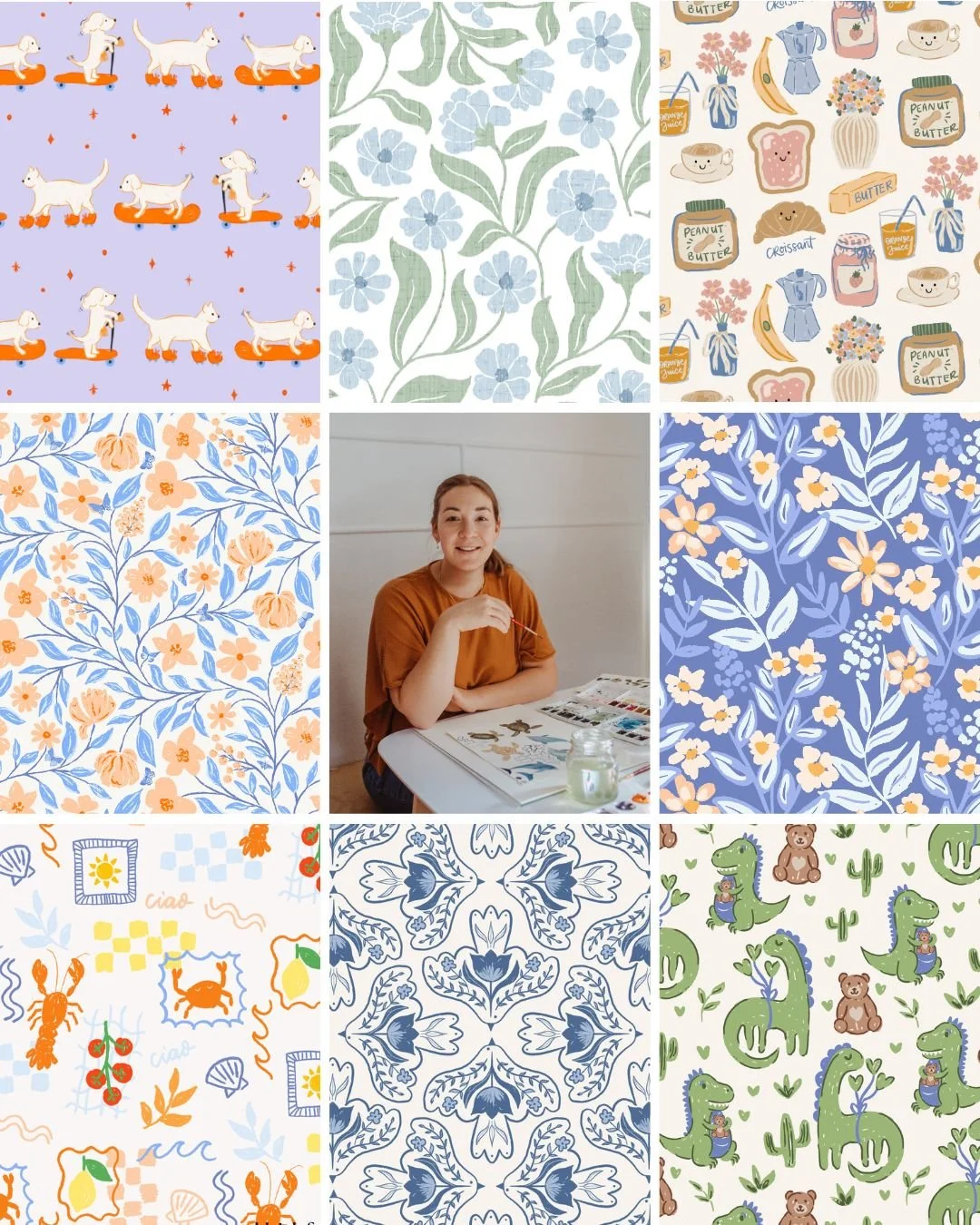
• Cohesive collections
• Defined market positioning
• Commercial presentation
• Obvious licensing availability
Licensing is about fit.
Art directors are scanning quickly to see if your work aligns with their product line.
If your portfolio feels scattered or unclear, they move on.
Not because your work is not good.
But because it does not feel easy to evaluate.
Is It Possible My Portfolio Looks Too Random?
Yes.
Many surface pattern designers upload everything they have created.
Florals next to geometrics.
Nursery next to gothic.
Muted palettes next to neon brights.
Each piece may be strong individually.
But together, they can dilute clarity.
A licensing-ready surface pattern portfolio should feel cohesive.
It should answer the question:
What is this designer known for?
If that answer is unclear, enquiries slow down.
Does Presentation Really Matter That Much?
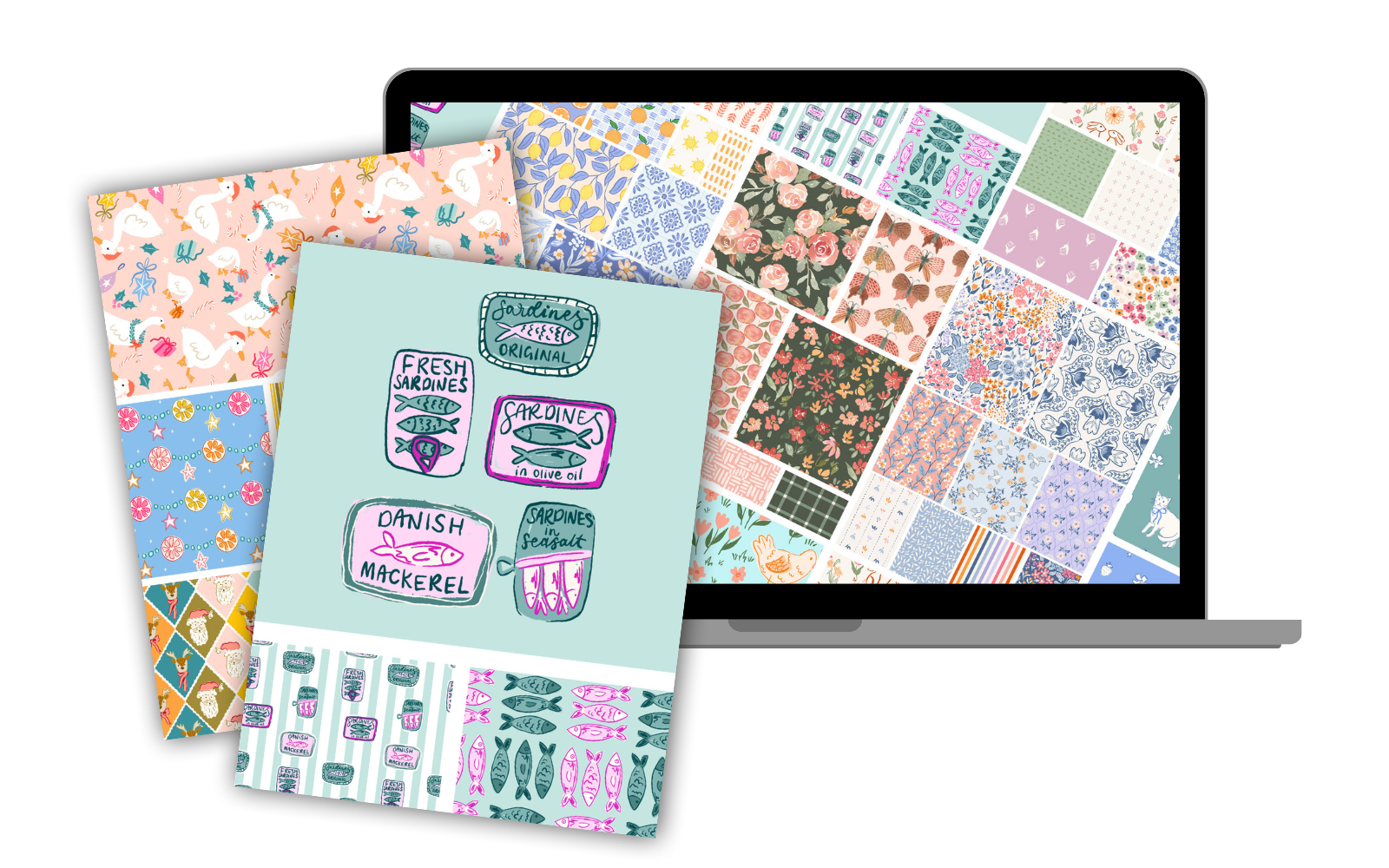
Yes.
Presentation signals professionalism.
If your repeats are hard to see.
If mockups are cluttered.
If layouts are inconsistent.
If contact information is difficult to find.
These small details create friction.
Art directors are reviewing many portfolios.
Clear, clean presentation communicates confidence and commercial awareness.
It makes their decision easier.
Am I Supposed to Choose Just One Niche?
You do not need to lock yourself into one niche forever.
But your portfolio should make your strongest market direction obvious.
For example:
• Children’s and nursery collections
• Home décor florals
• Quilting friendly repeats
• Contemporary geometric ranges
When your work is grouped clearly, art directors can instantly see where it fits.
That clarity builds trust.
What If I Feel Like I Need More Work?
This is one of the biggest myths in surface pattern design.
Most designers do not need more work.
They need:
• Editing
• Grouping
• Positioning
• Strategic presentation
More designs will not fix a structural issue.
Refinement will.
A smaller, cohesive portfolio will often outperform a large, scattered one.
What Actually Makes a Portfolio Convert to Licensing Enquiries?
A licensing-ready portfolio:
• Shows curated collections
• Demonstrates consistency
• Reflects commercial awareness
• Makes industry fit obvious
• Feels intentional and edited
It does not overwhelm.
It does not confuse.
It communicates clearly.
When clarity increases, confidence increases.
When confidence increases, opportunities follow.
If You Are Ready to Fix This Properly
If you are reading this and thinking:
My portfolio exists, but it is not working.
Then the next step is not creating more art.
It is restructuring what you already have.
Inside my Polished Portfolio Method, I teach surface pattern designers how to:
• Edit their work strategically
• Build cohesive collections
• Clarify their market positioning
• Present their designs professionally
• Structure a portfolio specifically for licensing

The Polished Portfolio Method is open for enrolment!
This is not about becoming more talented.
It is about becoming more intentional.
You likely already have the work.
Now it is time to make it work for you.
FAQ’s
Is this surface pattern portfolio course suitable for beginners?
This course is designed for surface pattern designers who already understand the basics of creating repeat patterns but feel unsure how to structure and present their work professionally. You do not need years of experience. You need a body of work that can be refined and organised strategically.
What if I do not have many finished collections yet?
You do not need a large number of collections before joining. Many designers enter with scattered designs and leave with clear, cohesive ranges. The course teaches you how to edit, group, and strengthen what you already have rather than starting from scratch.
Will this help me get licensing deals?
No course can guarantee licensing contracts, but this program is specifically designed to help you build a licensing-ready surface pattern portfolio. A clear, professionally structured portfolio increases your credibility and makes it easier for art directors to assess your work quickly.
I already have a portfolio. Is this course still relevant?
If your portfolio exists but is not attracting enquiries, it is often a structure issue rather than a skill issue. This course focuses on refining, repositioning, and improving presentation so your work communicates more clearly and professionally.
How is this different from free advice online?
Free advice often tells you what to do at a high level. This course gives you a clear framework and step-by-step structure for editing, organising, and positioning your portfolio. Instead of piecing together information from multiple sources, you follow a proven method designed specifically for surface pattern designers pursuing licensing.
What if I am not confident enough yet?
Confidence usually follows clarity. When your work is edited and organised intentionally, it begins to feel stronger immediately. Many designers discover they were more ready than they thought once they applied structure to their portfolio.