How do I Build a Licensing Ready Surface Pattern Portfolio

You have the designs. You have the style. You might even have a website with your patterns on it, but something still feels off, and licensing enquiries aren't coming in the way you hoped.
If your portfolio feels scattered, unfinished, or just not quite professional yet, you're not alone. This is exactly where most surface pattern designers get stuck.
Here's what I've learned after licensing over 100 patterns: the problem is rarely the work itself. It's the structure around it.
In this post, I'll walk you through exactly how to take the designs you already have and turn them into a portfolio that's genuinely licensing-ready, no starting from scratch required.
Can You Build a Surface Pattern Portfolio With the Designs You Already Have?
In most cases, yes.
Most designers I speak to already have:
• Multiple repeat patterns
• At least two or three emerging collections
• Clear stylistic themes
• Designs created with products in mind
What they do not have is a framework for:
• Editing
• Grouping
• Positioning
• Presenting
Without structure, even strong work can look unrefined.
With structure, the same work looks cohesive and commercially ready.
That shift is what turns a folder of patterns into a licensing-ready portfolio.
What Makes a Surface Pattern Portfolio Licensing-Ready?
A licensing-ready portfolio is different from a general art portfolio.
It is designed for art directors, brands, and manufacturers who need to quickly assess:
• Style consistency
• Market fit
• Commercial awareness
• Professional presentation
It answers unspoken questions like:
• Would this work for our product line?
• Can this designer build ranges, not just single prints?
• Do they understand how their designs translate to product?
A strong surface pattern design portfolio makes those answers obvious.
Step 1: Edit Before You Add Anything New
One of the biggest mistakes designers make is assuming the solution is to create more.
More designs.
More collections.
More experiments.
But a professional portfolio begins with editing.
Ask yourself:
• Which designs feel most cohesive together?
• Where is my strongest style emerging?
• Which patterns feel commercially relevant?
• What would I confidently show an art director?
You are not trying to show everything.
You are trying to show your strongest, most aligned work.
Editing builds clarity.
Clarity builds confidence.
Step 2: Organise Designs Into Clear Collections

Licensing is rarely about single standalone prints.
It is about ranges.
Collections demonstrate:
• Colour coordination
• Hierarchy between hero and supporting prints
• Awareness of how products are built
• Professional design thinking
Even three to five coordinating prints can form a strong mini collection.
When grouped intentionally, they immediately elevate your portfolio.
Instead of looking like scattered experiments, your work begins to look strategic.
Step 3: Clarify the Market You Are Designing For
A common question designers ask is:
“Do I have to pick just one niche?”
Not necessarily.
But your portfolio should make it clear where your work fits best.
Are you designing for:
• Nursery and children’s décor
• Quilting and fabric
• Homewares
• Stationery
• Apparel
If an art director cannot immediately see how your designs translate to their product category, they may move on.
Clarity reduces friction.
And reducing friction increases opportunity.
Step 4: Improve Presentation Without Overcomplicating It
Professional presentation does not require expensive mockups or complex website builds.
It requires:
• Clear repeat visibility
• Simple, clean layouts
• Consistent image sizing
• Minimal clutter
• Easy contact information
Your portfolio should feel calm and intentional.
Art directors are scanning quickly.
Make their job easy.
Do You Need Mockups in a Surface Pattern Portfolio?
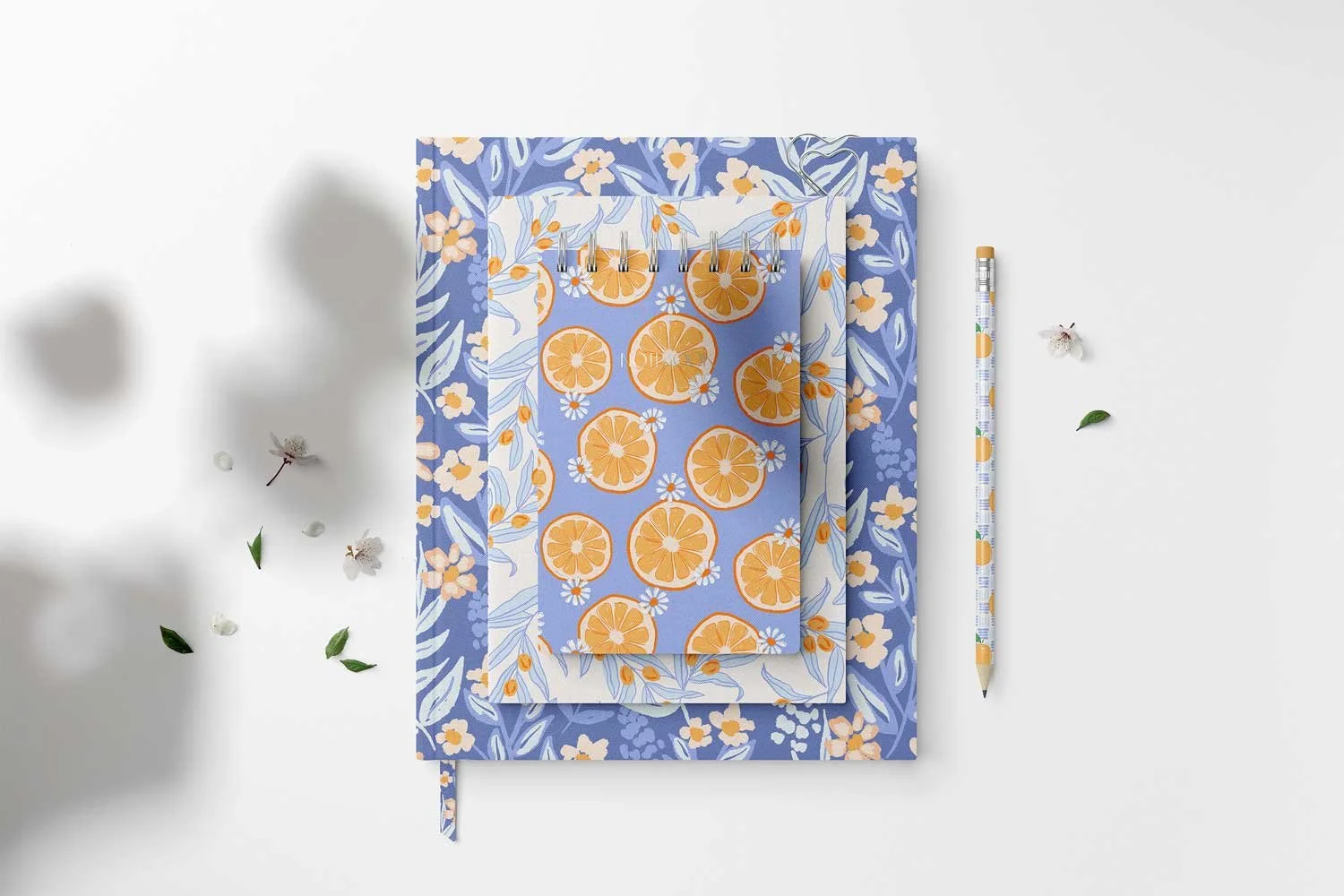
Mockups are not mandatory, but they are highly recommended.
Clean mockups help art directors visualise:
• Scale
• Product application
• Commercial potential
They signal that you understand how surface pattern design works in real product environments.
Keep them simple so your pattern remains the focus.
Why Most Portfolios Feel “Not Ready”
Many designers say:
“I just need to refine a few more things.”
But what often feels like “not ready” is actually:
• Unedited work
• Unclear positioning
• No defined collections
• Lack of structure
When you apply a clear framework, the feeling of readiness shifts quickly.
Because nothing was missing.
It just was not organised strategically.
How Do You Know When Your Portfolio Is Strong Enough to Pitch?
You are likely ready to pitch when:
• Your portfolio shows cohesive collections
• Your style direction feels clear
• Your work aligns with specific markets
• Your presentation feels professional
• Your contact information is obvious
Perfection is not the goal.
Clarity is.
And clarity is something you can build intentionally.
If You Want Help Structuring Your Portfolio
If this post has made you realise that your work is stronger than you thought, but you need a clear framework to organise it properly, I am teaching exactly that inside my free 4-part workshop on building a licensing-ready surface pattern portfolio.
Inside the training, I walk you through:
• What art directors are actually scanning for
• How to edit your work confidently
• How to structure collections clearly
• How to position your portfolio for licensing opportunities
This is designed specifically for surface pattern designers who:
• Have the work
• Want licensing enquiries
• And are ready to move from scattered to strategic
You can register for the free workshop below.
You do not need more talent.
You need structure.
And that is something you can build.

FAQ’s
How many collections should I include in a surface pattern portfolio?
You do not need a large number of collections to build a strong surface pattern portfolio. Three to six cohesive collections is often enough to demonstrate consistency, range, and commercial awareness. What matters most is that each collection feels intentional and aligned with a specific market or product category.
What should I remove from my surface pattern design portfolio?
You should remove work that feels inconsistent with your strongest style direction, experimental pieces that do not align with your target market, and designs that dilute cohesion. A licensing-ready portfolio is curated. Showing fewer, stronger collections will usually make your work look more professional than showing everything you have created.
Should my surface pattern portfolio be on my website or a PDF?
Ideally, your surface pattern design portfolio should live on your website so art directors can access it easily. A clean, well-organised website portfolio feels professional and accessible. You can also prepare a tailored PDF portfolio when pitching specific brands, but your website should act as your primary licensing-ready showcase.