When to Create Christmas Designs for Licensing

It's Never Too Late to Create Christmas Designs
It is the middle of the year. Christmas adverts are nowhere in sight, your feed is full of anything but tinsel, and holiday art is probably the last thing on your mind.
That is exactly why now is the right time to make it.
If you have been telling yourself it is too early to think about Christmas designs, or that you have already missed the window for this year, let me take that worry off you. It is never too late to create Christmas designs. The only thing that changes is who they are for.
Is it too late to create Christmas designs this year?
No. Print on demand sellers and small businesses can use holiday art you make right now for this Christmas, while larger brands are already planning their festive ranges a year or more ahead.
So the real answer depends on which buyer you are designing for. There is a version of "this year" and a version of "next year," and the lovely part is that the same designs can serve both.
Most designers freeze here because they picture one single deadline and assume they have sailed past it. There isn't one deadline. There are several, spread right across the calendar.

Who actually buys Christmas art, and when do they plan?
Christmas is bought in waves. Manufacturers and licensors plan furthest ahead, often a year or more, while print on demand and small businesses buy almost up to the last minute.
Here is roughly how the timing falls:
Print on demand (Spoonflower and similar): little to no lead time. A repeat you upload this week can be selling on fabric, wrapping paper, or cards for this Christmas.
Small businesses and indie makers: a few weeks to a couple of months. The boutique stationery brand, the maker ordering a short run. This year is still on the table.
Larger brands, publishers, and manufacturers: commonly six to eighteen months ahead. By the time the product reaches the shops, those designs were signed off a year or more earlier. Pitch them now and you are designing for next Christmas and the one after.
This is why the work is never wasted. A design that misses the manufacturing window for this year is not a write-off. It is simply early for next year.
Why does Christmas art belong in your licensing portfolio?
Holiday is one of the biggest categories brands license art for, so seasonal designs make your portfolio useful to more buyers, and they do not date the way trend work does.
Think about how much product exists purely because of Christmas. Wrapping paper, cards, table linen, ornaments, pyjamas, advent calendars, tins, crackers. Someone designed all of it, and brands come back looking every single year, on a dependable cycle that is rare in this industry.
A strong holiday piece also shows range. It tells an art director you can work to a brief and a season, not only paint what you feel like on a given day. That signals someone they can actually commission.
And unlike a lot of trend work, Christmas art does not expire. Holly is holly. A buyer looking next March for the coming season will happily fall for a design you made now.
If you are not sure your portfolio is pulling its weight, this pairs well with my post on what art directors look for in a surface pattern portfolio.
What should you design right now?
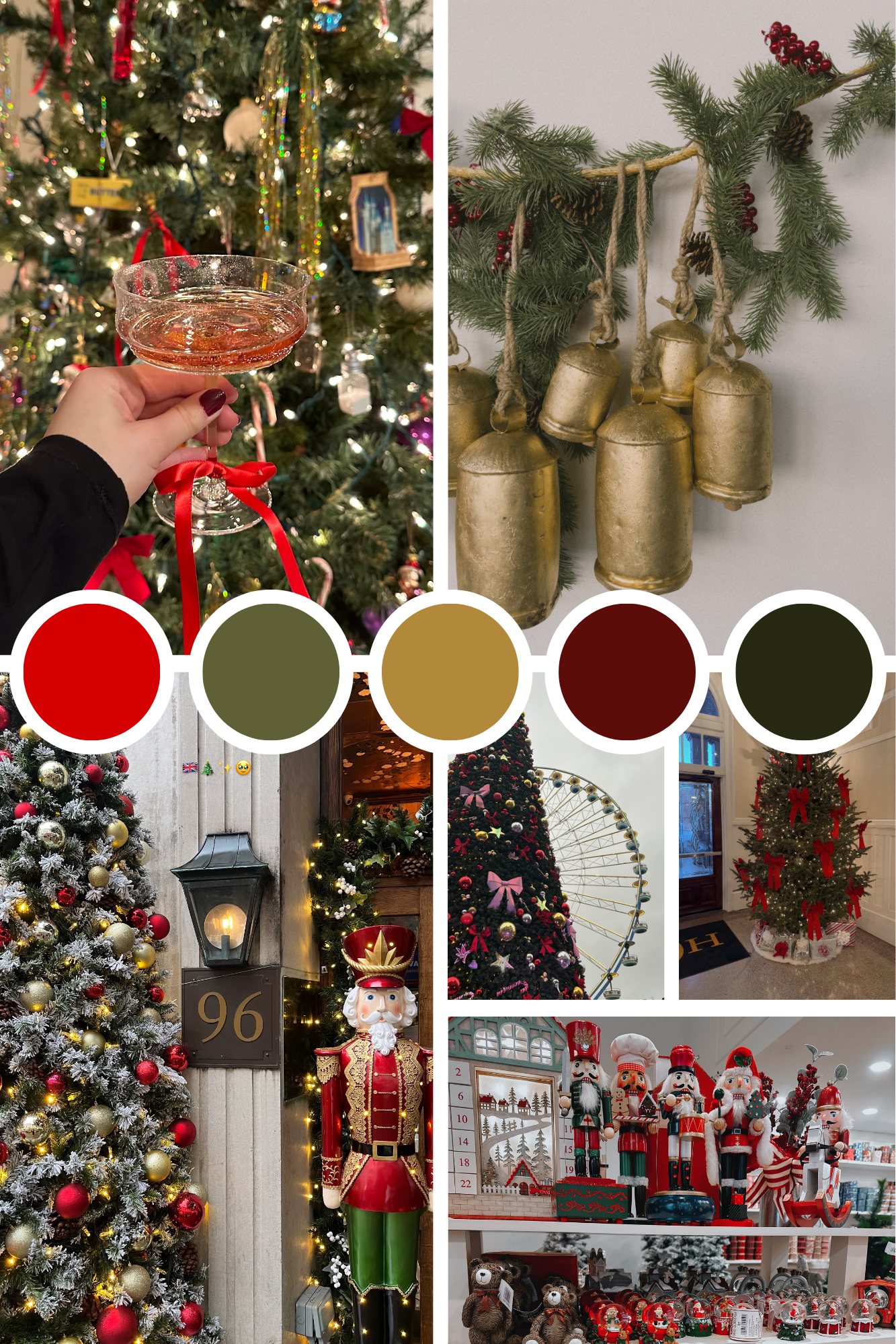
Start with one small, coordinated set, a hero print and a couple of supporting patterns, rather than waiting until you can produce a full collection.
You do not need a sprawling range to begin. You need a few designs that clearly belong together. A main motif or floral, a coordinating geometric or stripe, and a simple blender or two a buyer could imagine across a set of products. That is enough to show an idea and an aesthetic.
A few prompts to get you moving:
Pick a palette first. Traditional red and green, or something less expected like warm neutrals, icy blues, or a single-colour story. A fresh palette is often what makes a buyer pause on a category they have seen a thousand times.
Design the repeat so it works small. Wrapping paper and cards live or die on how a pattern reads at a tiny scale.
Make a hero and let the rest support it. One print does the talking, the coordinates make it feel like a collection.
This is the part to protect from your own overthinking. You do not need a signature style locked in before you make Christmas art. If you have designs you are proud of, you are ready to put a holiday set together.
How do you show Christmas designs so a buyer can picture them?
Put the pattern on the product. A design shown as wrapping paper, a card, or a gift tag is far easier for a buyer to say yes to than a flat tile on a white background.
This is the gap I see most often. The art is genuinely good, but it is presented as a flat square, and the buyer has to do all the work of imagining it as a real object. Most won't bother. Your job is to close that gap for them.
A mockup does exactly that. It takes your repeat and shows it as the thing it wants to become, so the person looking sees a product on a shelf instead of a file on a screen.
To make that easy, I have a free Christmas gift wrap mockup you can drop your own design straight into. Pop your pattern in and you have a finished, portfolio-ready image, ready for Pinterest, a pitch, or your own shop.
It comes from inside Magic Mockup Maker, the tool I built so I could mock up a whole collection in minutes instead of fighting with Photoshop. The free wrap is yours to keep either way.
Those mockups are also perfect for Pinterest, which is where a lot of my own licensing enquiries quietly begin. If you want to turn them into pins fast, here is how I do exactly that.
You have already done the hard part
So here is where this leaves you. Make holiday art now and it can sell through print on demand and small businesses for this Christmas, while the same pieces sit in your portfolio ready to pitch bigger brands for the next two. There is no version where the work does not count.
You can already make beautiful patterns. This is just pointing that at the most dependable season in the calendar, and giving a buyer an easy way to say yes.