Pinterest Marketing for Surface Pattern Designers (Without Spending Hours on It)
Pinterest for Surface Pattern Designers: How to Get Your Work Seen and Attract Licensing Enquiries
If you've been spending most of your marketing energy on Instagram and wondering why nothing is really happening with your designs, Pinterest might be the shift that changes everything.
I know that's a big claim. But here's the thing: Pinterest is not a social media platform. It's a visual search engine. And that one distinction changes how it works, who sees your content, and why it's one of the most underused tools in a surface pattern designer's toolkit.
In this post I'm going to walk you through why Pinterest is worth your time, what to actually pin as a designer, and how to stay consistent without it becoming another overwhelming task on your list.
Why Pinterest Works Differently for Surface Pattern Designers
Pinterest is a visual search engine, not a social feed. When someone types "floral surface pattern" or "abstract repeat design" into the search bar, they're actively looking for exactly what you make. That's very different to Instagram, where you're competing for a few seconds of attention inside a scroll that moves whether you post or not.
Art directors use Pinterest for trend research. Buyers and brand representatives save images to mood boards. Manufacturers look for design inspiration. The people who could actually license your work are already there, actively searching for designs like yours.
And here's the part that makes Pinterest genuinely different from every other platform: it's evergreen. A pin you post today can still be driving traffic to your portfolio or website in two years. Instagram has a shelf life of hours. Pinterest has a shelf life of years. For designers who want consistent visibility without constantly feeding an algorithm, that matters enormously.
What Most Surface Pattern Designers Get Wrong About Pinterest
Most designers either skip Pinterest altogether or post sporadically when they remember, which isn't enough to build real momentum. Pinterest rewards consistency. If you show up once a month, the algorithm has no reason to push your content. If you show up regularly, even just a few times a week, it does.
The other mistake is treating Pinterest like Instagram: posting a pretty square image and calling it done. Pinterest has its own best practices and its own rhythm. The dimensions are different (1000 x 1500px is the current standard). The descriptions work differently. And the type of content that performs well is different too.
None of that is hard to get right once you understand it. It's just specific.
What to Pin as a Surface Pattern Designer
If you're not sure what to put on Pinterest, here's where I'd start:
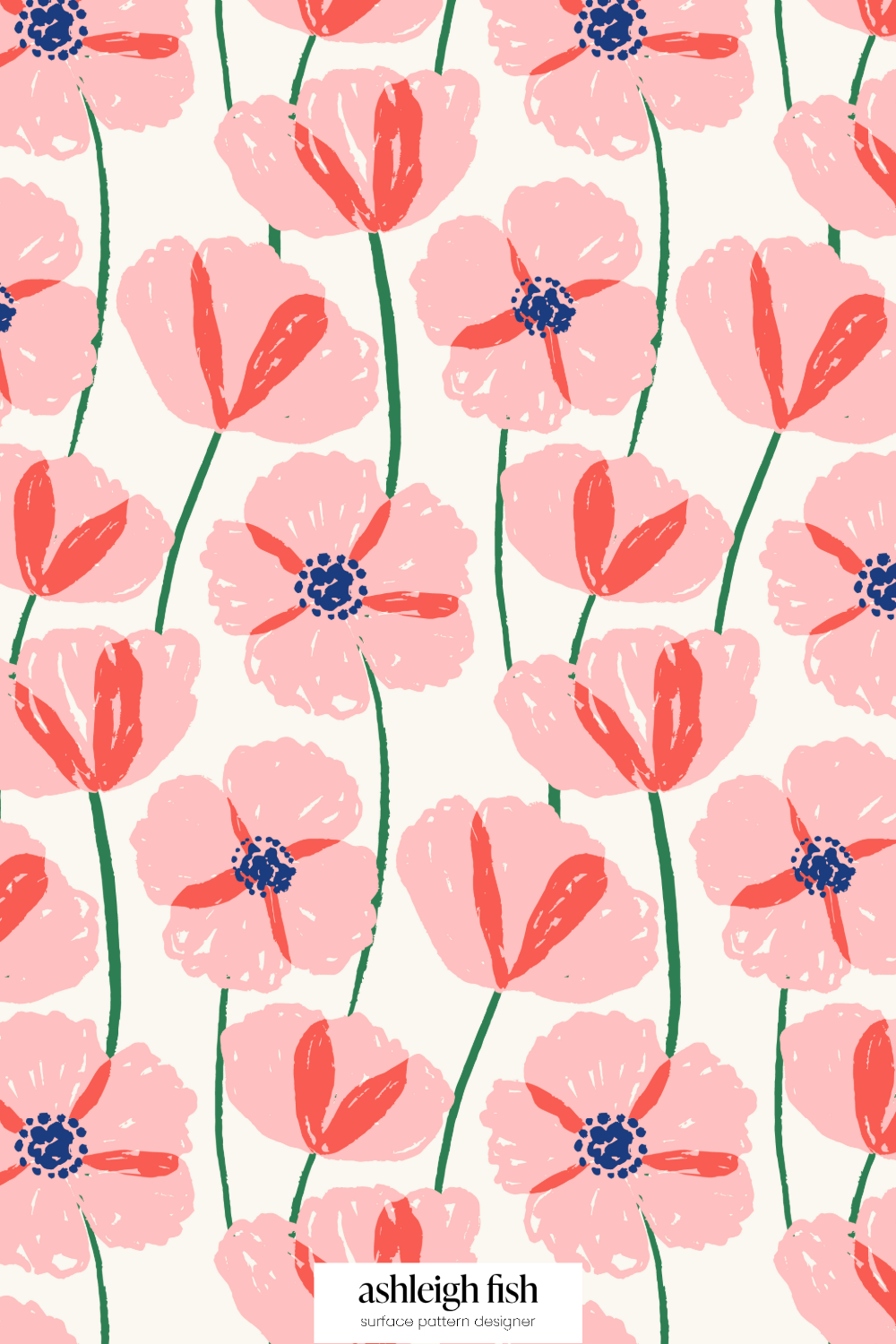
Your designs on their own. Simple, clean pin graphics that show your pattern at a readable scale, with your logo and a link back to your portfolio or website. The goal is not just to look pretty, it's to make it easy for someone who finds your pin to find you.
Designs in multiple colourways. If you've created a pattern in three colourways, that's three pins. Each one has its own search potential and its own chance of landing in front of someone different.
Challenge designs. Work from Erin Kendal's Blender Bonanza, Creative Studio Collective challenges, or any themed design brief is worth pinning. These designs are timely, trend-relevant, and show the range of what you can create.
Designs in context. Mockup images showing your pattern on a product, fabric, stationery, or homewear give brands and buyers a much clearer picture of how your work could translate. This is where the right tool can genuinely save you hours.
How to Stay Consistent Without It Taking Over Your Week
Consistency on Pinterest doesn't mean posting every single day from scratch. It means batching.
Pick one time slot a week, even 30 to 45 minutes, to turn your recent designs into pin graphics and get them scheduled or uploaded. If you've finished five new designs this week, turn all five into pins in one session. Done. Move on.
For the graphic creation side, I use my own free pin maker tool, which takes your pattern design and formats it into a Pinterest-ready pin without you having to touch Canva or wrestle with dimensions. You upload your design, adjust it, and download. The free Pin Generator is here if you want to try it.
For scheduling, Pinterest's own native scheduler works well. Set your pins to go out across the week and you're done. Aim for consistency over volume. Five solid pins a week, every week, builds far more traction than 30 pins one week and nothing for the next three.
Writing Pin Descriptions That Actually Work
This is the part most designers skip, and it's one of the highest-leverage things you can do.
Each pin needs a keyword-rich description. Keep it simple: describe the design, name the style, include words your ideal buyer or brand might actually search. Think: "floral surface pattern design, hand-painted watercolour look, perfect for fabric, stationery, and homewear.”
Write for search, not for your followers. You're not writing a caption. You're writing a discovery tool.
If you find SEO descriptions hard to write, here's the tip I always come back to: pretend you've lost it.
Imagine the design or product exists somewhere out in the world and you need to describe it to someone so they can go and find it for you. What would you tell them?
If it was a greeting card, you'd say it's a greeting card. You'd probably say it's a birthday card. You'd describe what's on it — flowers, a cake, balloons. You'd mention the style, watercolour, hand lettered, illustrated. Every one of those details is something someone might type into a search bar.
The same logic applies to a pattern. If someone was scrolling through your Instagram feed trying to find a specific design you'd mentioned, how would you describe it so they could spot it? You'd talk about the motifs, the florals, the animals, the geometric shapes. You'd mention the colours. The theme. The season. Whether it's bold and graphic or soft and ditsy.
All of those descriptive words are your SEO. They are your keywords. The more specifically and naturally you can describe what's actually in your design, the more findable it becomes, on Pinterest, on Google, and anywhere else someone might be searching for exactly what you make.
The Timing Tip Most Designers Miss: Start Your Seasonal Pins Now
Here's something that catches a lot of designers off guard the first time they really lean into Pinterest: the platform is slow to build momentum, and that's actually a good thing once you understand it, but it means you need to be thinking ahead.
Right now is the perfect time to be getting your Christmas, Halloween, and autumn/winter seasonal designs onto Pinterest. Not because Christmas is around the corner, but because it isn't. Pinterest content takes time to gain traction. The pins you post today are the ones that will be getting pushed out to people when the season actually arrives.
If you're thinking "but I haven't finished my Christmas collection for this year yet," that's fine. You don't need to have this year's collection done to start pinning for Christmas right now.
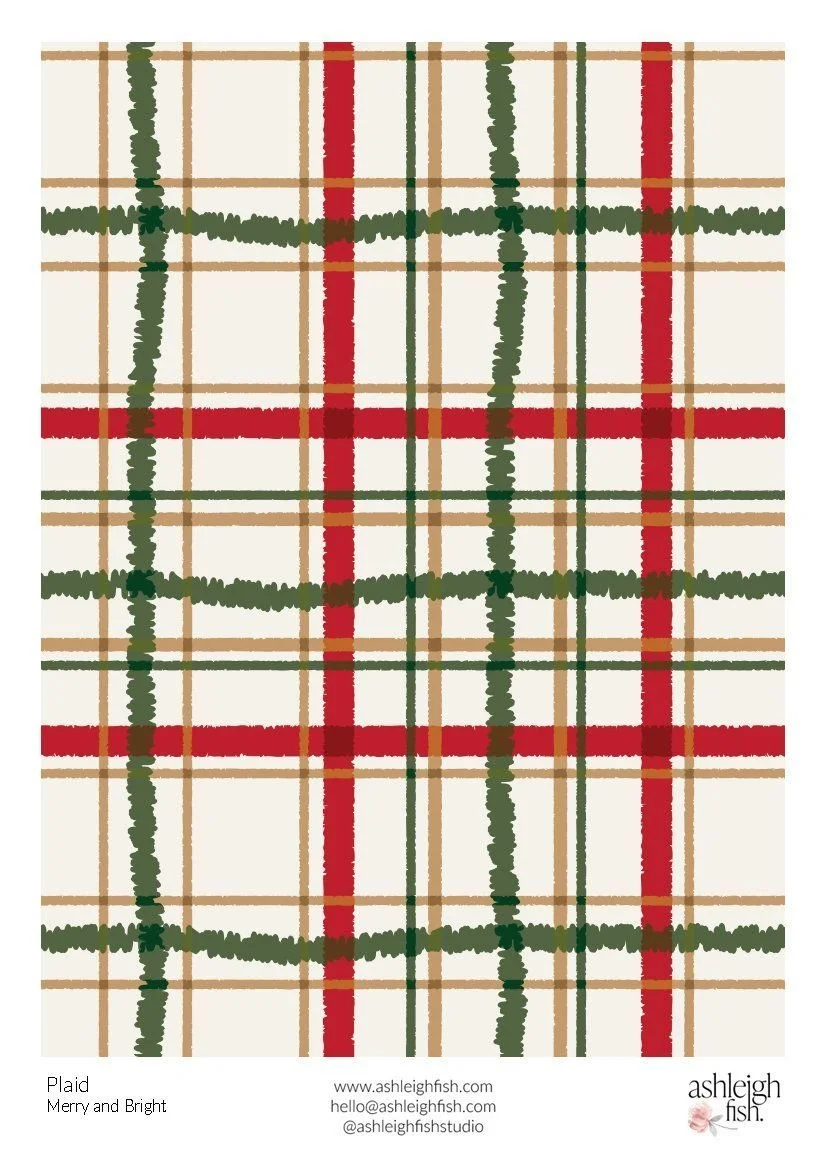
Go back through your older work. Last year's Christmas designs. The year before's Halloween collection. Your autumn and winter patterns from previous seasons. Create fresh pin graphics for them, new mockups, new pin formats, updated descriptions, and get them live now. The designs are already made. You're just giving them new packaging and a new chance to be found.
By the time buyers, brands, and art directors are actively searching for Christmas surface patterns, your pins will have had months to build up. That's the advantage of thinking ahead on Pinterest. It rewards the designers who plant seeds before the season, not the ones who scramble at the last minute.
(This design is from 2022 and does well every Christmas but also completely drops off in the first half of the year).
And if you haven't started thinking about your Christmas collection for this year yet, now is genuinely a good time to start. Pinterest is a great motivator for this, knowing your seasonal designs need to be live well before the season takes the pressure off and gives you a real deadline to work towards.
This is the piece that gets overlooked most often, and it's the most important.
The designs that tend to attract licensing enquiries on Pinterest are not always the most elaborate or technically impressive. They're the ones that are findable, presented clearly, and linked back to a portfolio or website.
Every pin should link somewhere. Your portfolio, your website, or a relevant page. Never leave the link field blank. The whole point of Pinterest is not just visibility, it's traffic. Someone sees your design, clicks, lands on your portfolio, and becomes a warm lead. That journey has to be connected.
You can come and see how I use Pinterest for my own design work over at my Pinterest profile. I post my designs regularly, including new collections and work from design challenges, and you can follow along to see exactly how I'm doing it.
Take the Next Step
If this is new to you and you want to go beyond the basics, a few places to start:
My free Pinterest Guide: Grab my free guide with practical tips on writing pin titles and descriptions that actually help your work get found. It's a solid starting point.
My Pinterest Workshop: If you want to build a full Pinterest strategy, not just pin occasionally but use Pinterest to actively grow your visibility with brands and attract licensing enquiries, the Pinterest Workshop covers exactly how I do it. You can check it out here.
My free Pin Generator: The fastest way to start turning your patterns into Pinterest-ready graphics without the graphic design faff. Try it here.
Your designs are already made. The creative work is done. What Pinterest does is make sure the right people can actually find them.
That's the part worth investing 30 minutes a week in.
xx Ashleigh
FAQs
How often should surface pattern designers post on Pinterest?
Consistency matters more than volume. Posting three to five pins per week, every week, builds more traction than posting 30 pins one week and nothing for the next month. Pinterest's algorithm rewards regular activity, so a sustainable weekly habit outperforms sporadic bursts every time. Batch your pin creation in one session per week and use Pinterest's native scheduler to spread them out across the week.
When is the best time to start pinning seasonal designs for Christmas and Halloween?
Now, regardless of what month you're reading this. Pinterest content takes months to build search momentum, so seasonal pins need to go live well before the season arrives. If it's mid-year, your Christmas and Halloween pins should already be going up. You don't need this year's collection finished to start: go back through your older seasonal designs, create fresh pin graphics and mockups for them, and get them live so they have time to build traction before the seasonal searches spike.
Do I need a lot of followers on Pinterest to get my surface patterns found by brands?
No. Pinterest is a search engine, not a follower-dependent platform. A pin linked to your portfolio can be found by an art director searching for exactly your style regardless of how many followers you have. What matters is that your pins are keyword-rich, linked back to your website or portfolio, and posted consistently. The designers who attract licensing enquiries through Pinterest are not necessarily the ones with the biggest accounts, they're the ones whose work is findable.